

- B.C. projects a $13.3B deficit in 2026–27, improving to $11.4B by 2028–29.
- Lowest personal income-tax rate rises to 5.60% for 2026; bracket/credit indexation paused 2027–2030.
- PST expands to additional services starting Oct. 1, 2026, including accounting/bookkeeping and certain professional services.
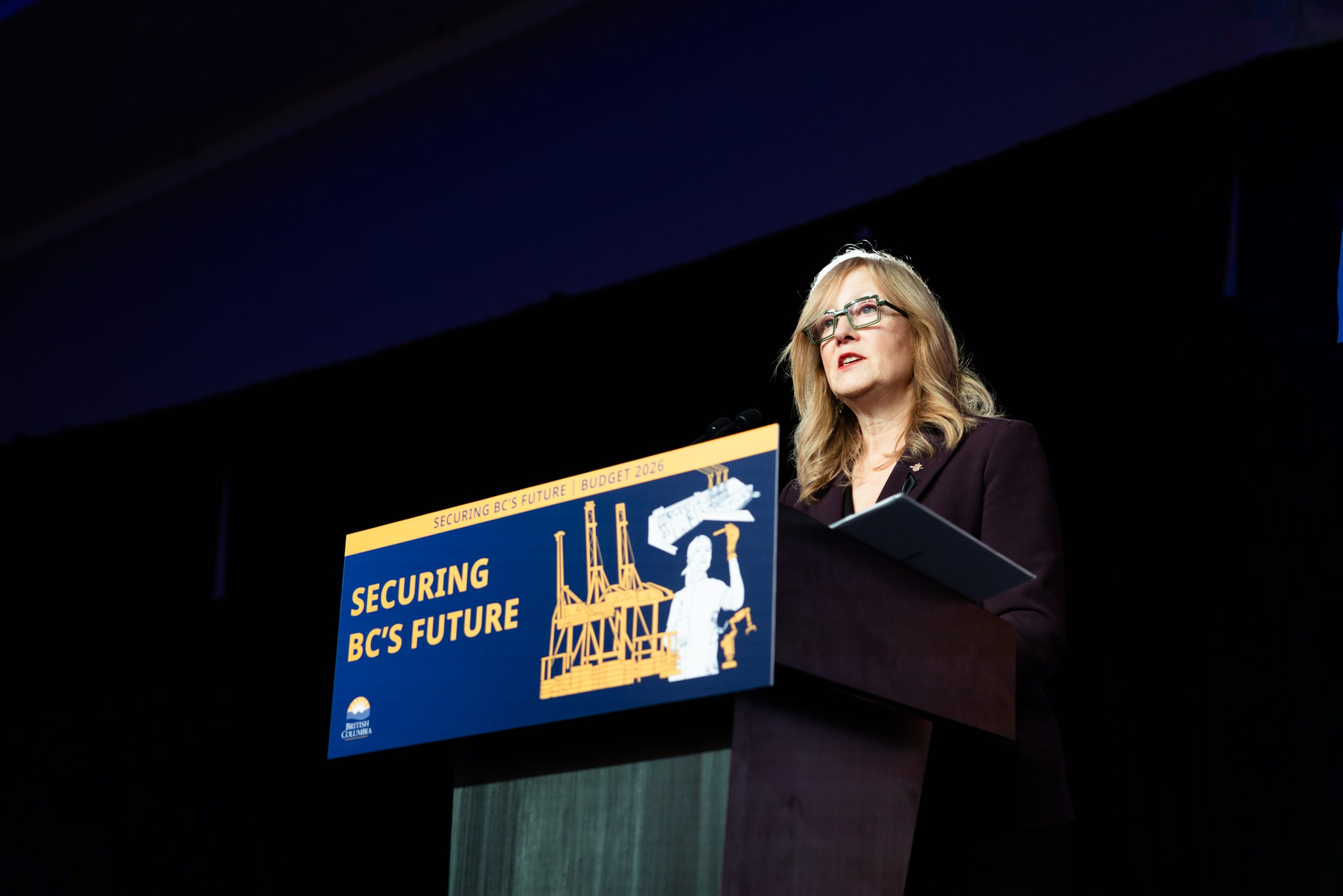
Victoria, BC, Canada (WNEWS Vancouver) – British Columbia Finance Minister Brenda Bailey has unveiled what she calls a “serious” budget for 2026. B.C. Budget 2026 outlines a three-year fiscal plan, starting with a projected $13.3 billion deficit in 2026–27 and improving to $11.4 billion by 2028–29, according to budget documents. The government says the plan aims to protect “core services” and use targeted tax changes and cost controls to strengthen the province’s long-term finances.
The budget comes at a time of affordability challenges and slower economic growth. It includes measures that will affect households, businesses, and public-sector workers, especially through changes to personal income tax rules, a broader PST base, and plans to reduce public-sector staffing through attrition and hiring limits.
A record deficit, with a plan to shrink government payroll
Budget 2026 expects deficits to shrink over the next three years, though they start at a historically high level. The budget overview says the deficit-to-GDP ratio will drop from 2.9% in 2026–27 to 2.3% in 2028–29, partly due to an “efficiency review,” hiring restrictions, and streamlining programs.
The fiscal plan sets a main staffing goal: to reduce the public sector by 15,000 full-time equivalent (FTE) positions over three years. The budget describes this as administrative consolidation and cutting non-essential spending, while “protecting frontline jobs and services.”
Some outside reports say the plan relies mostly on attrition, hiring limits, and possible retirement incentives instead of immediate layoffs. However, there are concerns about service impacts if vacancies go unfilled.
A significant change for taxpayers is that the tax rate on the lowest personal income bracket in British Columbia is being raised by 0.54 per cent. According to Global News, this will result in 60 per cent of tax filers facing higher bills, with the average taxpayer seeing a $76 increase.C.’s lowest rate will go from 5.06% to 5.60% for 2026, applying to the first income bracket ($50,363 for 2026). This change will appear after payroll withholdings are updated mid-year.
The same section also outlines that personal income tax brackets and non-refundable credits will have indexation paused from 2027 through 2030, then resume indexation in 2031. The budget notes that the change will have a greater effect on higher-income earners.
The PST changes could have a significant impact on consumers and many service-based businesses. Starting October 1, 2026, the province will begin charging PST on several professional services that were previously exempt. Newly taxable services will include accounting, bookkeeping, architecture, engineering, geoscience, certain property management services, commissions for non-residential real estate, and security and private investigation services. The government says this change is intended to broaden what it calls a comparatively narrow sales-tax base.
The budget also outlines the elimination of certain PST exemptions (such as some sewing/clothing-related inputs and services), as part of what it describes as updating a comparatively narrow sales-tax base.
Other tax updates include higher taxes on high-value homes and owners with foreign or untaxed worldwide income. These changes will come through adjustments to the Additional School Tax and the Speculation and Vacancy Tax in future years.
Social supports and disability: what the budget confirms
For those who rely on income and disability supports, the budget includes spending projections for income, disability, and supplementary assistance. It also highlights policy changes already in progress for people receiving disability assistance.
Budget 2026 states it is investing $52 million to remove barriers for couples receiving disability assistance, including a change (starting December 1, 2025) so that couples where both partners receive disability assistance receive the same support allowance as two single recipients. It also notes that, as of January 1, 2026, couples where one partner has the Persons with Disabilities (PWD) designation benefit from an increased annual earnings exemption, allowing them to keep more of their earned income.
The budget documents do not include a clear, single-line “rate increase” for income assistance or PWD monthly rates, and no new increases are announced for single adult recipients. The main change highlighted in this section is the removal of barriers for couples, while individual monthly support rates remain unchanged from those previously announced. People interested in eligibility, supplements, or rate tables should check government program pages for updates and new effective dates.
Business and investor takeaways
The government calls its approach “disciplined” and focused on protecting services. According to BC Gov News, business groups and analysts are focused on two key themes in the recent B.C. budget: the introduction of new tax measures and cost controls, alongside concerns about ongoing large deficits and rising debt. Early reports indicate that Budget 2026 combines new taxes, such as an increase in the first income tax bracket and a pause in tax bracket indexing, with targeted incentives and spending changes, rather than implementing major immediate cuts.
In the coming days, political and public debate will likely focus on whether B.C. can cut staffing and administrative costs without hurting service levels, and whether expanding the PST to more services will raise consumer costs or be absorbed by businesses.