

Vancouver, BC, Canada (WNEWS VANCOUVER OP-ED) – Metro Vancouver needs to stop seeing North Shore congestion as a short-term problem and recognize it as a deeper issue in one of British Columbia’s key transportation corridors. The region should build a third Burrard Inlet crossing as a tunnel that can support future SkyTrain service to the North Shore. This idea is no longer far-fetched. Official plans already show that rapid transit options are being considered between Metrotown and the North Shore through the Second Narrows corridor. TransLink is also working on the R2 extension to Metrotown, planning for Bus Rapid Transit, and studying the corridor for the long term.
- Is a new Third Burrard Inlet crossing worth it? Yes, if it’s built for the future
- The Second Narrows corridor also needs a full rethink.
- Tolled express lanes should be on the table
- Vision 2100 should encompass more than one bridge or tunnel.
- Vision 2100 also needs a true regional metro network.
- The cost of doing nothing is not zero.
The urgency is clear. Vancouver was named Canada’s most congested city in TomTom’s 2025 Traffic Index, with drivers losing 112 hours each year to rush-hour delays. New 2025 data also shows the Ironworkers Memorial Bridge carries about 130,700 vehicles daily, making it the busiest bridge per lane in Metro Vancouver. This isn’t just a busy region; it’s overloaded at a critical point.
More than ten years after the Port Mann/Highway 1 project was finished from Vancouver to Langley, Highway 1 is more crowded than ever. Provincial records show the main bridge and corridor upgrades were done by 2013 and 2014, covering the full 37-kilometre stretch. Still, the corridor is under strain, and the North Shore bottleneck adds to the region’s traffic problems.
Is a new Third Burrard Inlet crossing worth it? Yes, if it’s built for the future
It’s fair to ask before any big project: Is a third crossing actually worth it?
The answer is yes, but only if it’s done right.
If governments spend billions just to add another basic traffic link, that’s not enough. But if the project is a future-ready tunnel that provides backup, leaves space for rail, helps move goods, and strengthens the whole network, then the answer is clearly yes. Metro Vancouver’s problem isn’t just too many cars. It’s not enough backup, not enough capacity where it’s needed, and not enough long-term planning.
That’s why the new Third Burrard Inlet Crossing should be designed from the start to support future SkyTrain or similar rapid transit to the North Shore. Current planning for the Metrotown–North Shore corridor is already moving that way. TransLink’s Bus Rapid Transit program says the route will link Park Royal, Capilano Mall, Lower Lonsdale, Lower Lynn, Burnaby Heights, Brentwood, BCIT, and Metrotown, with direct connections to the Millennium and Expo lines. This should be the starting point, not the finish line.
The Second Narrows corridor also needs a full rethink.
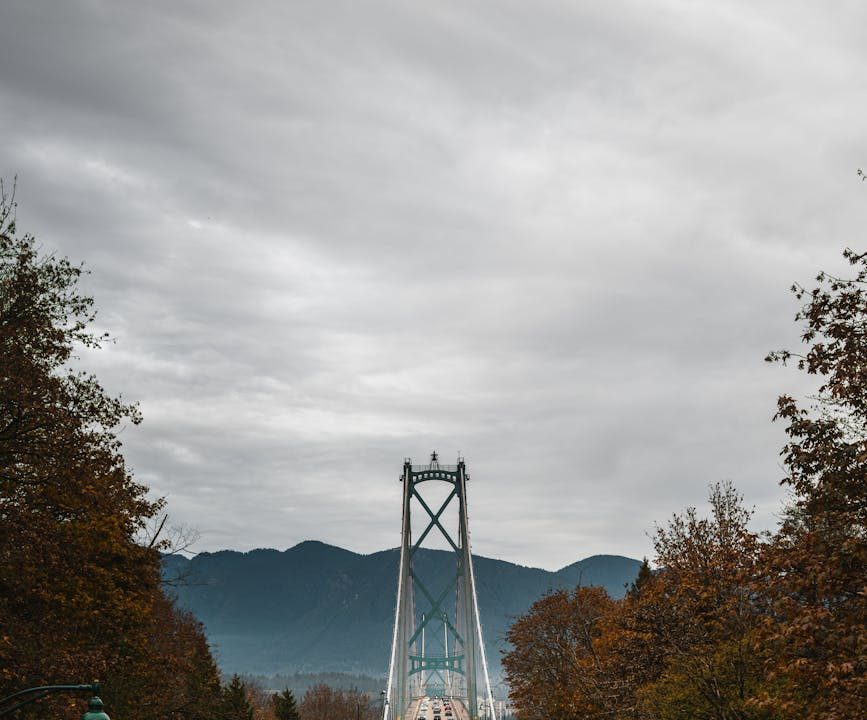
A third Burrard Inlet Crossing by itself won’t fix the region’s problems if the Ironworkers Memorial Bridge corridor is left to become permanently overloaded. The Second Narrows crossing should be replaced or completely reworked as part of a bigger Highway 1 and North Shore plan.
This could mean building a double-decker bridge with more capacity and express lanes that connect directly to Highway 1. It might also mean replacing the bridge to ensure it can support future rail service from Metrotown through Willingdon and the Second Narrows corridor. Either way, the current setup isn’t enough. The region shouldn’t build a new crossing and ignore the need for a long-term plan for the Ironworkers corridor.
There is a strong basis for planning in this direction. TransLink’s 10-Year Priorities under Transport 2050 call for rapid transit planning between Metrotown and Park Royal via the Second Narrows corridor, alongside major Bus Rapid Transit expansion and broader regional transit growth. The City of Vancouver’s current project page says the same corridor is being advanced through RapidBus, BRT planning, and a long-term rapid transit study.
Tolled express lanes should be on the table
Metro Vancouver also needs to consider real corridor management tools. Express lanes between the North Shore and Langley should be discussed, especially if they’re part of a rebuilt Second Narrows corridor and future Highway 1 upgrades.
This idea will be controversial, especially if tolls are included. The region already pays for congestion every day through lost time, wasted fuel, delayed freight, unreliable buses, and economic slowdowns. A well-designed express lane system could prioritize buses, goods movement, emergency vehicles, and faster trips while also helping to pay for long-term infrastructure. This isn’t to say that tolling is politically simple, but Metro Vancouver should be willing to discuss solutions that match the scale of the problem.
Vision 2100 should encompass more than one bridge or tunnel.
This debate should go beyond the next election. Metro Vancouver needs a Vision 2100 approach to transportation planning.
That means building the Third Burrard Inlet Crossing as a tunnel, ready for future rail. It also means rebuilding or expanding the Second Narrows corridor, adding tolled express lanes between the North Shore and Langley, and seriously looking at a long-term east-west expressway system connecting Richmond, Vancouver, the North Shore, the Tri-Cities, and Ridge Meadows. This could even include underground sections through Vancouver if needed to protect urban land while adding new capacity.
That last idea is ambitious and isn’t current government policy. But that’s the point of a Vision 2100 plan: to ask what kind of region Metro Vancouver wants to be by the end of the century, and to start protecting corridors and land now instead of regretting missed chances later.
Vision 2100 also needs a true regional metro network.
A true Vision 2100 plan shouldn’t stop at roads. It should also include a much larger SkyTrain or metro-style network across the region.
TransLink’s adopted Transport 2050 framework already envisions major rapid-transit growth, including up to 170 kilometres of new rapid transit in the first 10 years of priorities, a North Shore rapid transit connection, and exploration of further SkyTrain extensions beyond today’s network.
By 2100, the region should think even bigger. This could mean expanding the Expo Line further into the Fraser Valley, including Abbotsford, and adding a future rapid transit link to Mission from Coquitlam. These aren’t approved projects yet and would need coordination beyond TransLink’s current role. But if Metro Vancouver and the Fraser Valley keep growing together, long-term rail integration should be seen as something to plan for, not just a dream.
The cost of doing nothing is not zero.
Too often, politicians and planners act like doing nothing is the smart financial choice. It’s one of the worst congestion choke points in Canada. It means asking two strained crossings to keep carrying the pressure of a growing region. It means keeping Highway 1 overloaded years after its last major modernization. And it means leaving the North Shore, Burnaby, Vancouver, and the wider regional economy vulnerable whenever a single incident ripples across the system. The cost of inaction may be less visible on a budget line, but it is real.
Metro Vancouver needs to think bigger. A third Burrard Inlet crossing is worth it if it’s part of a larger future network. That means building a tunnel for SkyTrain, having a real replacement plan for the Second Narrows corridor, adding tolled express lanes from the North Shore to Langley, and making a Vision 2100 commitment to a true regional metro system and long-term corridor protection across the Lower Mainland.
The region doesn’t need more delays. It needs courage.